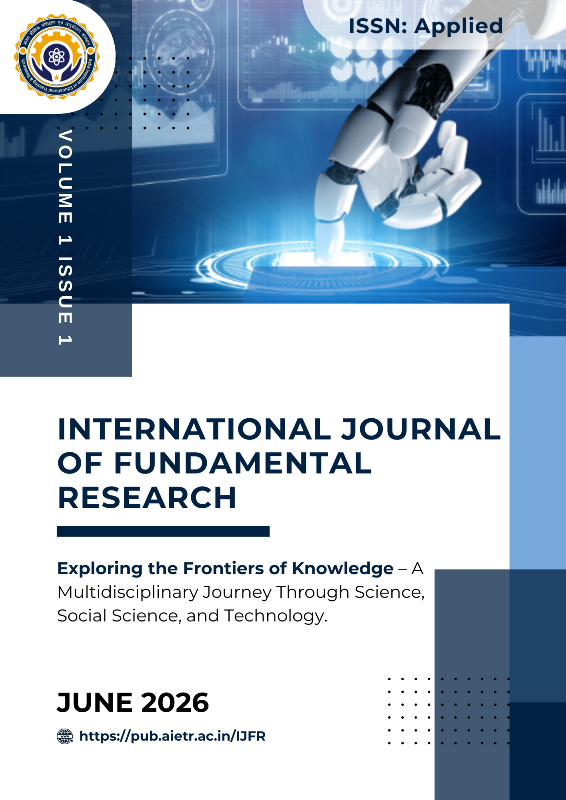
The International Journal of Fundamental Research (IJFR) welcomes high-quality theoretical, experimental, computational, analytical, and interdisciplinary research across fundamental and applied areas of science, technology, and engineering. The journal promotes research that advances scientific knowledge, develops innovative methodologies, introduces new materials and technologies, and addresses important scientific and technological challenges at local, national, and global levels.
The journal welcomes original and significant contributions in the following areas:
- Physics & Materials Science: theoretical and experimental physics, condensed matter physics, materials science, solid-state physics, magnetism, superconductivity, optics, photonics, electronics, semiconductor physics, dielectric materials, energy materials, and functional materials.
- Chemistry & Chemical Sciences: organic, inorganic, physical, analytical, and computational chemistry; chemical synthesis, catalysis, electrochemistry, spectroscopy, surface chemistry, materials chemistry, nanochemistry, and interdisciplinary chemical research.
- Nanoscience & Nanotechnology: nanomaterials, nanoparticles, nanostructures, nanocomposites, nanotubes, nanowires, thin films, nanoelectronics, nanophotonics, nanobiotechnology, nanomedicine, nanoscale characterization, and advanced nanoscale applications.
- Life Sciences & Biotechnology: molecular biology, microbiology, biotechnology, genetics, genomics, biochemistry, bioinformatics, cell biology, plant sciences, animal sciences, zoology, botany, and interdisciplinary biological research.
- Environmental Science & Sustainability: environmental pollution, environmental chemistry, ecology, biodiversity, climate change, environmental monitoring, conservation science, waste management, natural resources, environmental remediation, and sustainable technologies.
- Mathematics & Statistics: pure and applied mathematics, mathematical modeling, differential equations, numerical analysis, probability, statistics, optimization, mathematical computation, and mathematical methods applied to scientific and technological problems.
- Computer Science & Artificial Intelligence: artificial intelligence, machine learning, deep learning, data science, algorithms, computational intelligence, computer vision, natural language processing, information systems, cybersecurity, software technologies, and scientific computing.
- Engineering & Technology: electrical, electronics, communication, mechanical, civil, chemical, computer, manufacturing, industrial, biomedical, energy, and interdisciplinary engineering, including emerging technological applications.
- Earth & Geosciences: geology, geophysics, mineralogy, geochemistry, earth materials, hydrology, atmospheric sciences, environmental geoscience, natural hazards, remote sensing, GIS, and studies of Earth systems and processes.
- Agricultural & Food Sciences: crop science, soil science, plant biotechnology, agricultural microbiology, plant protection, food science, food technology, agricultural nanotechnology, sustainable agriculture, and innovative agricultural systems.
- Health, Biomedical & Pharmaceutical Sciences: biomedical sciences, pharmacology, pharmaceutical sciences, drug discovery, drug delivery, toxicology, biotechnology, biomaterials, biomedical technologies, and interdisciplinary health-related research.
- Energy Science & Renewable Technologies: solar energy, photovoltaic materials, batteries, supercapacitors, fuel cells, hydrogen energy, bioenergy, energy storage, energy conversion, energy efficiency, and emerging sustainable energy technologies.
- Computational & Theoretical Research: computational modeling, numerical simulation, theoretical analysis, molecular dynamics, Monte Carlo methods, density functional theory, first-principles calculations, data-driven approaches, and computational techniques for scientific discovery.
- Advanced Materials & Emerging Technologies: smart materials, functional materials, ceramics, polymers, composites, alloys, high-entropy materials, metamaterials, quantum materials, advanced coatings, sensors, and other emerging materials and technologies.
- Interdisciplinary Scientific Research: multidisciplinary studies integrating two or more areas of science, technology, engineering, mathematics, life sciences, materials science, computation, and other related scientific disciplines.
IJFR particularly encourages original, innovative, evidence-based, scientifically rigorous, and interdisciplinary research that contributes substantially to existing knowledge. The journal welcomes studies presenting novel findings, advanced methodologies, theoretical developments, new materials, computational approaches, experimental investigations, and emerging scientific or technological applications.
Along the submission process, authors are requested to choose one of the following sections for their contribution:
- Physics and Materials Science
- Chemistry and Chemical Sciences
- Nanoscience and Nanotechnology
- Life Sciences and Biotechnology
- Environmental Science and Sustainability
- Mathematics and Statistics
- Computer Science and Artificial Intelligence
- Engineering and Technology
- Earth and Geosciences
- Agricultural and Food Sciences
- Health, Biomedical and Pharmaceutical Sciences
- Energy Science and Renewable Technologies
- Computational and Theoretical Research
- Advanced Materials and Emerging Technologies
- Interdisciplinary Scientific Research
The International Journal of Fundamental Research (IJFR) welcomes high-quality theoretical, experimental, computational, analytical, and interdisciplinary research across fundamental and applied areas of science, technology, and engineering. The journal promotes research that advances scientific knowledge, develops innovative methodologies, introduces new materials and technologies, and addresses important scientific and technological challenges at local, national, and global levels.
The journal welcomes original and significant contributions in the following areas:
- Physics & Materials Science: theoretical and experimental physics, condensed matter physics, materials science, solid-state physics, magnetism, superconductivity, optics, photonics, electronics, semiconductor physics, dielectric materials, energy materials, and functional materials.
- Chemistry & Chemical Sciences: organic, inorganic, physical, analytical, and computational chemistry; chemical synthesis, catalysis, electrochemistry, spectroscopy, surface chemistry, materials chemistry, nanochemistry, and interdisciplinary chemical research.
- Nanoscience & Nanotechnology: nanomaterials, nanoparticles, nanostructures, nanocomposites, nanotubes, nanowires, thin films, nanoelectronics, nanophotonics, nanobiotechnology, nanomedicine, nanoscale characterization, and advanced nanoscale applications.
- Life Sciences & Biotechnology: molecular biology, microbiology, biotechnology, genetics, genomics, biochemistry, bioinformatics, cell biology, plant sciences, animal sciences, zoology, botany, and interdisciplinary biological research.
- Environmental Science & Sustainability: environmental pollution, environmental chemistry, ecology, biodiversity, climate change, environmental monitoring, conservation science, waste management, natural resources, environmental remediation, and sustainable technologies.
- Mathematics & Statistics: pure and applied mathematics, mathematical modeling, differential equations, numerical analysis, probability, statistics, optimization, mathematical computation, and mathematical methods applied to scientific and technological problems.
- Computer Science & Artificial Intelligence: artificial intelligence, machine learning, deep learning, data science, algorithms, computational intelligence, computer vision, natural language processing, information systems, cybersecurity, software technologies, and scientific computing.
- Engineering & Technology: electrical, electronics, communication, mechanical, civil, chemical, computer, manufacturing, industrial, biomedical, energy, and interdisciplinary engineering, including emerging technological applications.
- Earth & Geosciences: geology, geophysics, mineralogy, geochemistry, earth materials, hydrology, atmospheric sciences, environmental geoscience, natural hazards, remote sensing, GIS, and studies of Earth systems and processes.
- Agricultural & Food Sciences: crop science, soil science, plant biotechnology, agricultural microbiology, plant protection, food science, food technology, agricultural nanotechnology, sustainable agriculture, and innovative agricultural systems.
- Health, Biomedical & Pharmaceutical Sciences: biomedical sciences, pharmacology, pharmaceutical sciences, drug discovery, drug delivery, toxicology, biotechnology, biomaterials, biomedical technologies, and interdisciplinary health-related research.
- Energy Science & Renewable Technologies: solar energy, photovoltaic materials, batteries, supercapacitors, fuel cells, hydrogen energy, bioenergy, energy storage, energy conversion, energy efficiency, and emerging sustainable energy technologies.
- Computational & Theoretical Research: computational modeling, numerical simulation, theoretical analysis, molecular dynamics, Monte Carlo methods, density functional theory, first-principles calculations, data-driven approaches, and computational techniques for scientific discovery.
- Advanced Materials & Emerging Technologies: smart materials, functional materials, ceramics, polymers, composites, alloys, high-entropy materials, metamaterials, quantum materials, advanced coatings, sensors, and other emerging materials and technologies.
- Interdisciplinary Scientific Research: multidisciplinary studies integrating two or more areas of science, technology, engineering, mathematics, life sciences, materials science, computation, and other related scientific disciplines.
IJFR particularly encourages original, innovative, evidence-based, scientifically rigorous, and interdisciplinary research that contributes substantially to existing knowledge. The journal welcomes studies presenting novel findings, advanced methodologies, theoretical developments, new materials, computational approaches, experimental investigations, and emerging scientific or technological applications.
Along the submission process, authors are requested to choose one of the following sections for their contribution:
- Physics and Materials Science
- Chemistry and Chemical Sciences
- Nanoscience and Nanotechnology
- Life Sciences and Biotechnology
- Environmental Science and Sustainability
- Mathematics and Statistics
- Computer Science and Artificial Intelligence
- Engineering and Technology
- Earth and Geosciences
- Agricultural and Food Sciences
- Health, Biomedical and Pharmaceutical Sciences
- Energy Science and Renewable Technologies
- Computational and Theoretical Research
- Advanced Materials and Emerging Technologies
- Interdisciplinary Scientific Research